
Ultimate Guide to Long-Term Recognition Strategies
Want to keep your employees engaged and reduce turnover? Long-term recognition strategies are the answer. These programs go beyond one-time rewards by embedding consistent, meaningful acknowledgment into everyday work. The result? Happier employees, stronger retention, and better business outcomes.
Key Takeaways:
- What it is: Regular, structured recognition tied to company values and milestones.
- Why it works: Employees who feel recognized are 45% less likely to leave, and companies see 31% lower turnover.
- How to do it: Incorporate recognition into onboarding, performance reviews, and milestones with tools like peer-to-peer shoutouts, leadership awards, and custom merchandise.
Start by defining clear goals, aligning recognition with your values, and using tools to track impact. Programs like these aren’t just a nice-to-have - they’re a proven way to build loyalty and drive success.
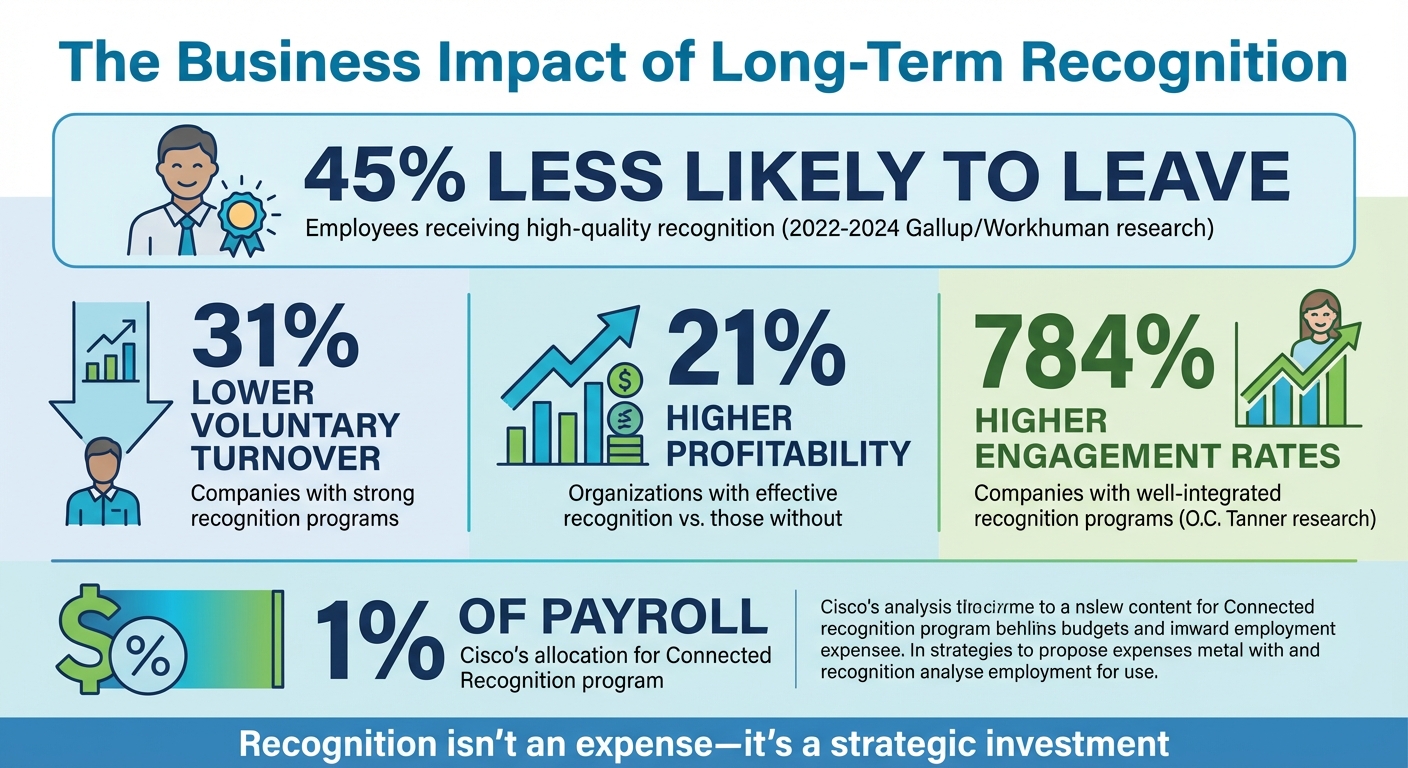
Long-Term Recognition Programs: Key Statistics and Impact on Employee Retention
Building Blocks of Long-Lasting Recognition Programs
Core Principles of Effective Recognition
To create recognition programs that genuinely inspire and sustain engagement, several key principles must be prioritized. Timeliness is crucial - acknowledging achievements or positive behaviors as soon as they happen strengthens the link between the action and the reward. This immediacy makes the recognition feel more meaningful. Authenticity is equally important. Instead of generic praise like "great job", focus on specific behaviors: explain what the person did, why it mattered, and how it benefited the team or customers. This level of detail ensures the recognition feels genuine and impactful.
Inclusivity is another cornerstone. Recognition should be accessible to everyone, regardless of their role - whether they’re on the frontlines, in corporate offices, working remotely, or paid hourly or salaried. It should also flow in all directions: from peers, from leaders to employees, and even from employees to leaders. This approach fosters a sense of belonging and ensures no group is unintentionally excluded. Tying recognition to company values makes it even more effective. By linking each acknowledgment to specific values or behaviors (like "Customer Obsession" or "Ownership"), you make abstract ideas tangible and reinforce cultural priorities in everyday work. Lastly, equity ensures recognition is fair. Use data to identify and correct any biases in how recognition is distributed - whether by department, location, or other factors - and establish clear criteria so similar contributions are rewarded equally. When these principles align with your company’s culture, recognition programs can thrive.
Aligning Recognition With Company Culture
To make recognition programs resonate, they must seamlessly integrate with your company’s culture. Start by clearly defining your mission, values, and the unique behaviors that shape how work is done in your organization. Then, build recognition practices around these elements. For instance, require every recognition to connect to a company value, or spotlight specific cultural themes each month or quarter. Share real-life examples of recognition during all-hands meetings, in leadership emails, or on the company intranet - this helps employees see how values are put into action.
The most effective programs are co-designed with employees. Use surveys or focus groups to understand what types of recognition feel most authentic and motivating within your culture. For example, in a people-focused workplace, recognition might highlight personal stories, team contributions, or life milestones alongside business achievements. In contrast, a results-driven culture might emphasize measurable successes or innovations. Frame accomplishments as stories of impact - describe how an achievement benefited customers, patients, or communities. For example, instead of just noting a technical fix, explain how it prevented downtime for 1,000 customers, connecting day-to-day work to the broader mission. Finally, use branded elements - like consistent visuals, tone of voice, or custom merchandise - to make recognition feel like a natural extension of your company’s identity. Stitchi’s custom merchandise programs, for instance, help U.S. companies maintain this consistency across locations.
Setting Long-Term Goals and KPIs
To ensure recognition programs drive meaningful outcomes, set clear, long-term goals that connect directly to both business and employee success. For example, you might aim to reduce voluntary turnover among top talent, boost employee engagement scores related to feeling valued, or increase manager participation in recognition efforts (e.g., "90% of managers recognize each team member at least once per quarter"). Another goal could be improving internal mobility or promotion rates by using recognition to encourage skill development.
Use SMART goals to track progress. For instance: "Within three years, improve positive responses to 'I receive recognition for good work' by 15 percentage points and reduce high-performer attrition by 20%." Operational targets could include metrics like recognitions per employee per quarter or the percentage of recognitions tied to company values. To measure success, track both leading indicators (such as recognition frequency or participation rates) and lagging indicators (like retention, performance, or customer satisfaction). Review this data quarterly to identify trends and address gaps. If certain teams or shifts show low recognition rates, targeted solutions - like manager training or adjusted budgets - can help ensure fairness and consistency.
Designing Recognition Programs for Lasting Impact
Types of Recognition for Long-Term Success
A recognition program that truly resonates requires more than an annual ceremony - it needs multiple layers working together to create a meaningful experience. One essential layer is peer-to-peer recognition, where employees acknowledge each other's contributions in real time. Digital platforms make this easy, fostering authentic and frequent moments of appreciation that feel genuine and immediate. On the other hand, leadership-driven awards highlight the organization's priorities by rewarding work that aligns with company values and strategic goals. These awards not only validate important efforts but also build trust and reinforce what truly matters.
Another cornerstone is service milestone recognition, which celebrates employees' journeys within the company. Recognizing anniversaries at intervals like 1, 3, 5, 10, or even 20+ years with personalized rewards - such as custom trophies, experiential gifts, or even sabbaticals - strengthens feelings of loyalty and belonging. Meanwhile, day-to-day recognition keeps the appreciation flowing between these milestones. Simple acts like giving shout-outs during meetings, writing thank-you notes for small victories, or sharing stories of completed projects can make a big difference. Together, these approaches create a well-rounded recognition system, reaching employees in diverse and meaningful ways. This foundation naturally transitions into strategies for embedding appreciation throughout the employee lifecycle.
Integrating Recognition Into the Employee Lifecycle
Recognition works best when it’s woven into every stage of an employee’s journey, rather than treated as a one-time event. During onboarding, for instance, welcoming new hires with personalized kits, sharing inspiring internal stories, or celebrating early wins - like completing training or offering fresh ideas - helps new employees feel valued from the start. At performance reviews, recognition can go beyond ratings by incorporating values-driven praise and tangible rewards such as gift cards, bonuses, or branded merchandise. This approach celebrates both achievements and behaviors that align with company goals.
Promotions also provide a unique opportunity for meaningful recognition. Instead of settling for a quick announcement, organizations can elevate the moment with leadership shout-outs, internal features showcasing the employee’s growth, or milestone gifts like custom awards or branded keepsakes. Recognition can also be tied to other key events like project completions, certifications, or even personal milestones, turning appreciation into an ongoing cultural practice. By embedding recognition into these moments, organizations make it a consistent and integral part of their culture. This sets the stage for using custom merchandise to leave a lasting impression.
Using Custom Merchandise for Recognition
Custom merchandise can play a powerful role in long-term recognition strategies, transforming appreciation into something tangible and enduring. High-quality branded items - like jackets, tech gadgets, or lifestyle products such as drinkware or bags - serve as lasting reminders of recognition moments. These items not only carry a high perceived value but also keep the company’s culture and gratitude visible. Personalization adds an extra layer of meaning: including an employee’s name, years of service, or a thoughtful message makes the gift feel unique and personal.
For sustained impact, consider tiered merchandise rewards that grow in value over time. For example, at 5, 10, or 15 years of service, employees could receive increasingly premium items, signaling deeper appreciation for their commitment. Custom kits for work anniversaries or major achievements can create memorable unboxing experiences, which employees often share with others, further amplifying the recognition’s reach.
Companies like Stitchi specialize in helping organizations design these kinds of memorable merchandise experiences. By offering strategic consulting, creative design, and flexible fulfillment, Stitchi ensures that every reward aligns with the company’s brand and goals. When thoughtfully chosen and integrated into a recognition program, merchandise becomes more than just a gift - it becomes a symbol of belonging and pride, reinforcing company culture every time it’s used or seen.
Building and Scaling a Multi-Year Recognition Program
Creating a Multi-Year Roadmap
Establishing a recognition program that lasts requires a thoughtful, phased approach. Start by assessing what matters most to your employees. Use surveys or focus groups to uncover their preferences - do they value monetary rewards, personalized gifts, or public acknowledgment? This insight allows you to design a program that aligns with both employee desires and company objectives [1].
Begin with a pilot program involving a small group. Use their feedback to fine-tune the initiative before rolling it out company-wide. Once validated, expand the program by integrating it into your HR systems to ensure consistency and ease of use [1]. The final step is ongoing optimization: measure outcomes, gather regular feedback, and make necessary adjustments to keep the program meaningful over time [3]. A well-planned budget is key to ensuring each phase is adequately supported.
Budgeting for Long-Term Recognition
A successful recognition program needs a realistic budget that accounts for various costs. For example, Cisco allocates 1% of its payroll to fund its Connected Recognition program, showcasing its commitment to rewarding employees [4]. Recognition isn’t just an expense - it’s an investment. Companies with strong recognition programs see tangible benefits, like 31% lower voluntary turnover and 21% higher profitability compared to those without [6].
Your budget should include funds for monetary rewards like bonuses and gift cards, branded merchandise, digital platforms, manager training, administrative costs, and contingency plans for future growth [1][5]. For companies with diverse teams, automated solutions that integrate with existing HR systems can streamline processes and control costs. If your program involves merchandise-based rewards, partners like Stitchi can help manage procurement and inventory through tech-driven platforms. These tools not only simplify spending but also provide real-time insights to track the program's impact as it scales. With proper financial planning and governance, you can ensure the program remains effective and consistent across the organization.
Governance and Program Ownership
Clear roles and responsibilities are essential for a recognition program’s success. Leadership at the executive level sets the tone by visibly participating in recognition efforts. This not only reinforces the program’s importance but also ensures adequate funding and resources are allocated for its long-term sustainability [4].
HR teams act as the architects of the program. They handle the design, choose the right platforms, train managers, track progress, and ensure consistency across departments [3]. Managers, on the other hand, are the frontline champions of recognition. Their role is to provide timely, meaningful acknowledgment to their team members [3]. By adopting this multi-level strategy - where executives lead by example, HR manages the framework, and managers deliver personalized recognition - you create a system that feels genuine, relevant, and fair to everyone involved.
Measuring and Improving Recognition Strategies
Key Metrics for Evaluating Impact
Tracking the right metrics is essential to understanding how well your recognition program is working. Start with employee engagement scores - these reflect how connected employees feel to their work and the company. Pair this with voluntary turnover rates, a key indicator of whether your recognition efforts are helping to retain top talent. Formal recognition programs are often linked to lower turnover, making this a critical area to monitor.
Another important metric is participation rates. Look at both overall participation and whether the program is inclusive - how many employees are actively giving and receiving recognition each month or quarter? It’s also helpful to focus on manager-level data, as employees with managers who excel at recognizing their contributions tend to report higher engagement levels. Additional metrics to track include peer-to-peer recognition activity, the frequency of recognition events, and qualitative insights from stay interviews or surveys. These data points provide a solid foundation for improving your program over time.
Using Data for Continuous Improvement
Data is your best tool for refining your recognition strategy. Once you’ve collected metrics, use them to make informed adjustments. Combine quantitative data from your recognition platform with qualitative feedback gathered through focus groups and surveys. Ask employees what types of recognition they find most meaningful - whether it’s public acknowledgment, private thank-yous, peer-to-peer recognition, or tangible rewards - and use their input to fine-tune your approach.
Digital dashboards can also reveal patterns in participation, redemption behaviors, and engagement trends. For merchandise-based recognition, platforms like Stitchi offer real-time insights that help you optimize budgets, track inventory, and measure program impact [8]. If you notice gaps - such as certain teams or groups receiving less recognition - you can address them with targeted training or updated guidelines. The goal is to create feedback loops where data continuously informs and improves your strategy.
Measuring Long-Term Recognition Impact
Short-term successes are great, but they don’t always guarantee lasting results. To understand the true impact of your recognition program, analyze employee cohorts over several years. Compare retention rates, career progression, and sustained engagement between employees who regularly receive recognition and those who don’t. For example, longitudinal research by Gallup and Workhuman from 2022 to 2024 found that employees receiving high-quality recognition were 45% less likely to leave their jobs after two years [2].
It’s also important to evaluate business outcomes. Compare departments with strong recognition cultures to those with weaker ones in terms of productivity, sales growth, and customer satisfaction. Research from O.C. Tanner shows that companies with well-integrated recognition programs have engagement rates 784% higher than those with less effective systems [7]. By analyzing these long-term trends and benchmarking against industry standards, you can demonstrate that recognition isn’t just a morale booster - it’s a strategic investment with measurable returns for your business.
sbb-itb-6f489d9
How to Create an Employee Recognition Strategy - The HR Leader's Guide to Employee Recognition
How Stitchi Supports Long-Term Recognition
Stitchi takes recognition to the next level by offering tailored merchandise solutions that seamlessly integrate into the employee lifecycle, ensuring your efforts leave a lasting impression.
Custom Merchandise for Memorable Recognition
Creating a recognition program that resonates over time requires thoughtful planning, especially when it comes to merchandise. Stitchi helps organizations craft custom, on-brand merchandise kits that transform recognition moments into unforgettable experiences. Whether it's a welcome kit for new hires, a first-year anniversary gift box, a five-year milestone package, or leadership awards, each piece reflects your company’s values and identity.
The process begins with personalized consulting to understand your goals, audience, and budget. Stitchi’s merchandise experts curate premium products that align with your brand - be it through sustainable materials, innovative designs, or locally sourced items. Each kit can include meaningful touches like value-driven messaging, personalized notes from leadership, and practical items such as high-quality apparel, drinkware, or tech accessories. These thoughtful details turn abstract company values into tangible, branded keepsakes, reinforcing your culture year after year. This hands-on approach is complemented by an efficient, tech-driven system to manage your program with ease.
Tech-Enabled Fulfillment and Insights
Managing merchandise for recognition programs across various locations, years, and employee groups can be daunting. Stitchi simplifies the process with a centralized platform that handles inventory tracking, ordering, budget management, and global fulfillment - all through one intuitive dashboard. This platform offers real-time updates on stock levels, reorder thresholds, and shipment routing, ensuring smooth delivery whether employees are remote in California or based at your Michigan headquarters.
The platform also provides valuable data to fine-tune your program. You can track order volumes by program type (onboarding, milestones, spot recognition), monitor per-employee spending in USD, and identify which kits and items resonate most with your teams. For instance, Craft, a Stitchi client, leveraged the platform’s warehousing and fulfillment services to establish a centralized merchandise system, achieving 60% faster fulfillment and complete inventory transparency [8]. These insights help you decide where to scale, which items to update, and how to allocate budgets for maximum impact.
Strategic Support for Enduring Success
Stitchi goes beyond logistics, offering strategic support to ensure your recognition program thrives over the long term. Dedicated merchandise experts collaborate with your HR, People, and Total Rewards teams to align every aspect of your program with your values, diversity goals, and budget constraints. Through discovery sessions, they map out your core values to create recognition tiers, suggest inclusive product options (like size-inclusive apparel, culturally considerate items, or non-alcoholic gifts), and help design recognition ecosystems that balance peer-to-peer, manager-led, and milestone awards.
This consultative approach ensures your recognition strategy evolves alongside your organization. Whether you're a startup rolling out your first onboarding kits or a global enterprise managing milestone programs across multiple locations, Stitchi handles everything - from design and sourcing to fulfillment. The result? A recognition program that remains fresh, meaningful, and aligned with your company’s identity, year after year.
Conclusion
Recognition strategies aren’t just feel-good initiatives - they’re smart investments in your organization’s future. Research consistently shows that well-designed recognition programs can dramatically reduce employee turnover and increase engagement. Fewer employees leaving means lower recruiting and training costs, while higher engagement translates into better performance, stronger customer relationships, and revenue growth.
Creating a recognition program that stands the test of time requires seeing it as an ongoing process, not a one-off effort. Start by identifying gaps in your current approach - use surveys or stay interviews to gather insights. Then, set two or three clear goals, like reducing voluntary turnover by a specific percentage or improving engagement scores by measurable points. Ensure your recognition criteria align with your company’s core values and design programs that work for all team setups - whether on-site, hybrid, or remote. Allocate a multi-year budget and consider piloting your program with one department. Track results, refine your approach, and then roll it out across the organization.
The best recognition programs strike a balance between consistency, personalization, and inclusivity. Recognition should happen regularly and be tied to specific achievements - not just reserved for annual reviews. Celebrate both outcomes and the behaviors that reflect your company’s culture. Technology can play a big role here, enabling peer-to-peer and manager-led recognition at scale. Partnering with experts like Stitchi can further enhance your efforts with custom merchandise and thoughtful, on-brand rewards. These tangible tokens of appreciation turn recognition into something employees can hold onto and cherish, reinforcing their connection to the company.
In a diverse, multigenerational workforce, recognition is a powerful tool for driving engagement, retention, and inclusion. Programs that adapt over time - whether by refreshing reward options, updating criteria, or analyzing data to uncover gaps - stay impactful and relevant. On the flip side, a casual or inconsistent approach risks disengagement, higher turnover, and missed opportunities to build a culture where employees feel genuinely valued.
As outlined in this guide, a well-thought-out recognition program delivers lasting rewards. Over the next 30 days, take the first steps: define your top recognition goals, identify a pilot group, and choose the tools or partners to support your vision. Audit your current practices - who’s being recognized, how often, and for what reasons - and set a date to review your findings. Recognition isn’t just a task; it’s a journey that strengthens loyalty, boosts performance, and shapes a workplace culture employees are proud to be part of.
FAQs
How do long-term recognition strategies help retain employees?
Long-term recognition strategies play a key role in keeping employees engaged and committed by building a workplace culture where appreciation and value are front and center. When employees regularly receive acknowledgment for their efforts, they’re more likely to stay motivated, connected, and loyal to the organization.
Adding a thoughtful touch, like personalized branded merchandise, can take recognition to the next level. These kinds of rewards not only strengthen a sense of belonging but also encourage positive behaviors. The result? Greater job satisfaction and reduced turnover.
What are the key elements of a successful recognition program?
Creating a recognition program that truly works begins with aligning it to your organization’s core goals and values. Celebrate achievements in ways that feel personal and genuine - whether it’s acknowledging an individual’s hard work or a team’s collective success. The key is to make the recognition timely and specific, so it resonates with those being celebrated.
Building a culture where appreciation thrives is crucial. It not only boosts engagement but also fosters loyalty among your employees. To ensure your program stays effective, use data to measure its impact and make thoughtful adjustments over time. By prioritizing these elements, you can create a recognition program that leaves a lasting impression.
What’s the best way for companies to measure the success of their recognition programs?
To determine how well their recognition programs are working, companies can track key metrics such as employee engagement, participation rates, and the overall reach of the program. Centralized tools, like merchandise management systems, make it easier to monitor these metrics and offer real-time insights.
For a deeper understanding of long-term outcomes, businesses should gather employee feedback through surveys and keep an eye on shifts in morale, brand loyalty, and the program's return on investment (ROI). Regularly reviewing this data helps ensure that recognition strategies stay effective and aligned with the company’s goals.